Tilmicosin is a semi-synthetic macrolide antibiotic exclusively used for livestock and poultry, derived from the hydrolysis product of tylosin. Tylosin reacts with 3,5-dimethylpiperidine to form tilmicosin base, which is then combined with phosphoric acid and water to produce tilmicosin phosphate.
Tilmicosin phosphate mainly acts against Gram-positive bacteria and is also effective against a few Gram-negative bacteria and mycoplasma. Its activity against *Actinobacillus pleuropneumoniae*, *Pasteurella*, and livestock/poultry mycoplasma is stronger than that of tylosin. It is rapidly absorbed, has strong tissue penetration, and a large volume of distribution.
Mechanism of Action:
It reversibly binds to the 50S subunit of bacterial ribosomes, blocking transpeptidation and mRNA translocation, thereby inhibiting bacterial protein synthesis and exerting bacteriostatic effects.
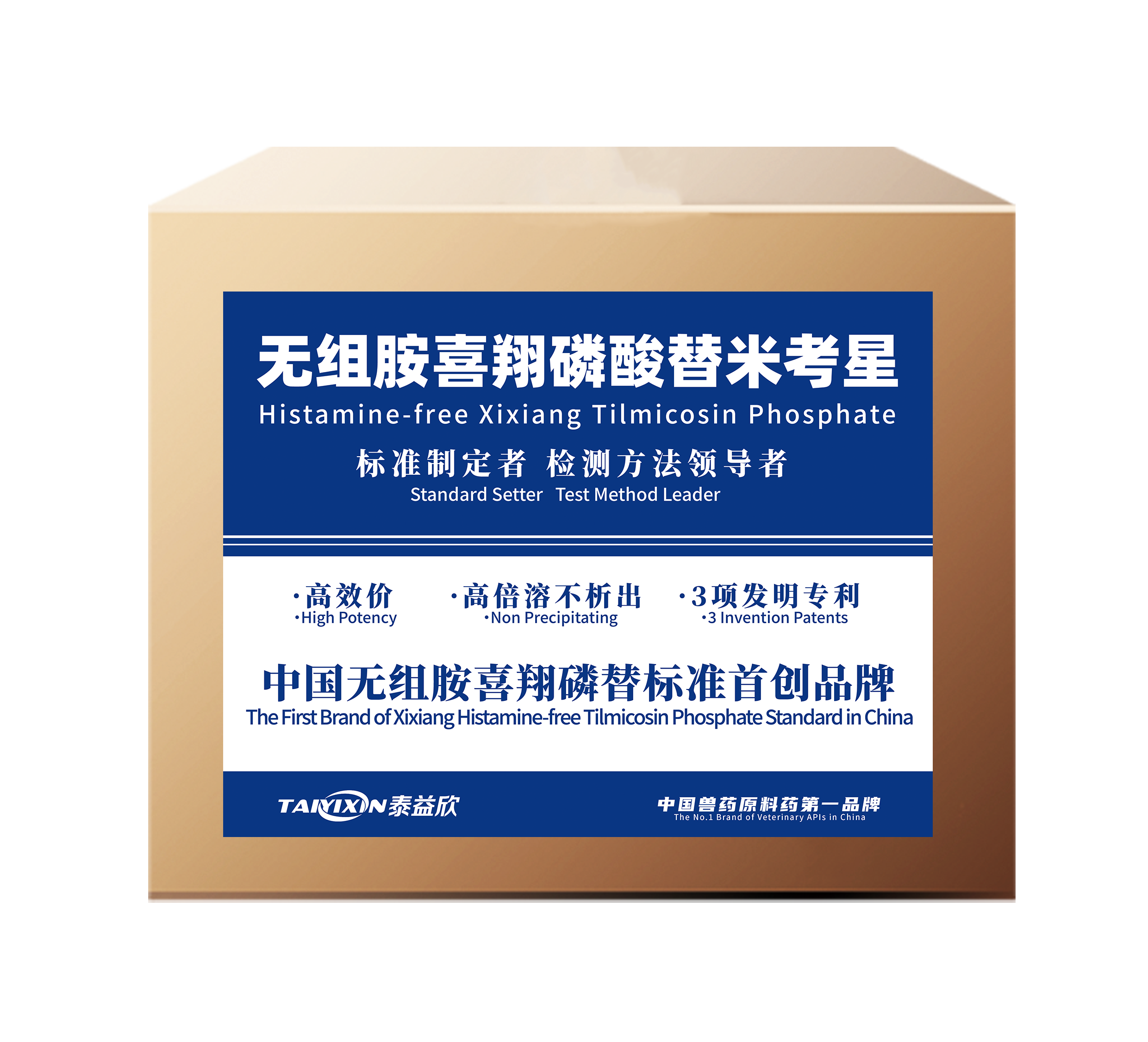
3 invention patents, high potency, highly soluble without precipitation, Xixiang Tilmicosin Phosphate standard-setter, internationally applicable
● Pharmacodynamics: Tilmicosin is an animal-specific semi-synthetic macrolide antibacterial agent. Its antibacterial activity is similar to tylosin, with strong inhibitory effects against Gram-positive bacteria, partial Gram-negative bacteria, mycoplasma, spirochetes, etc. Notably, its antibacterial activity against Actinobacillus pleuropneumoniae, Pasteurella, and avian/livestock mycoplasma is stronger than tylosin. 95% of Pasteurella haemolytica strains are sensitive to this product.
● Pharmacokinetics: Rapidly absorbed after administration, characterized by strong tissue penetration and a large volume of distribution (>2 L/kg). It achieves particularly high drug concentrations in tissues such as the lungs and mammary glands, with a prolonged duration of action. The half-life can reach 1–2 days. In dairy cows, peak plasma concentration is attained within 1 hour after administration, and milk concentrations remain bacterially active for 3 days.
● Toxicology: Tilmicosin has strong irritancy. Intramuscular injection may cause local inflammation, so deep intramuscular injection is recommended. It exhibits certain toxic effects on the cardiovascular system, including tachycardia and reduced contractility, leading to negative inotropic effects. Therefore, intravenous injection of this product is strictly prohibited.
视频号二维码
公众号
联系方式
视频号二维码
公众号