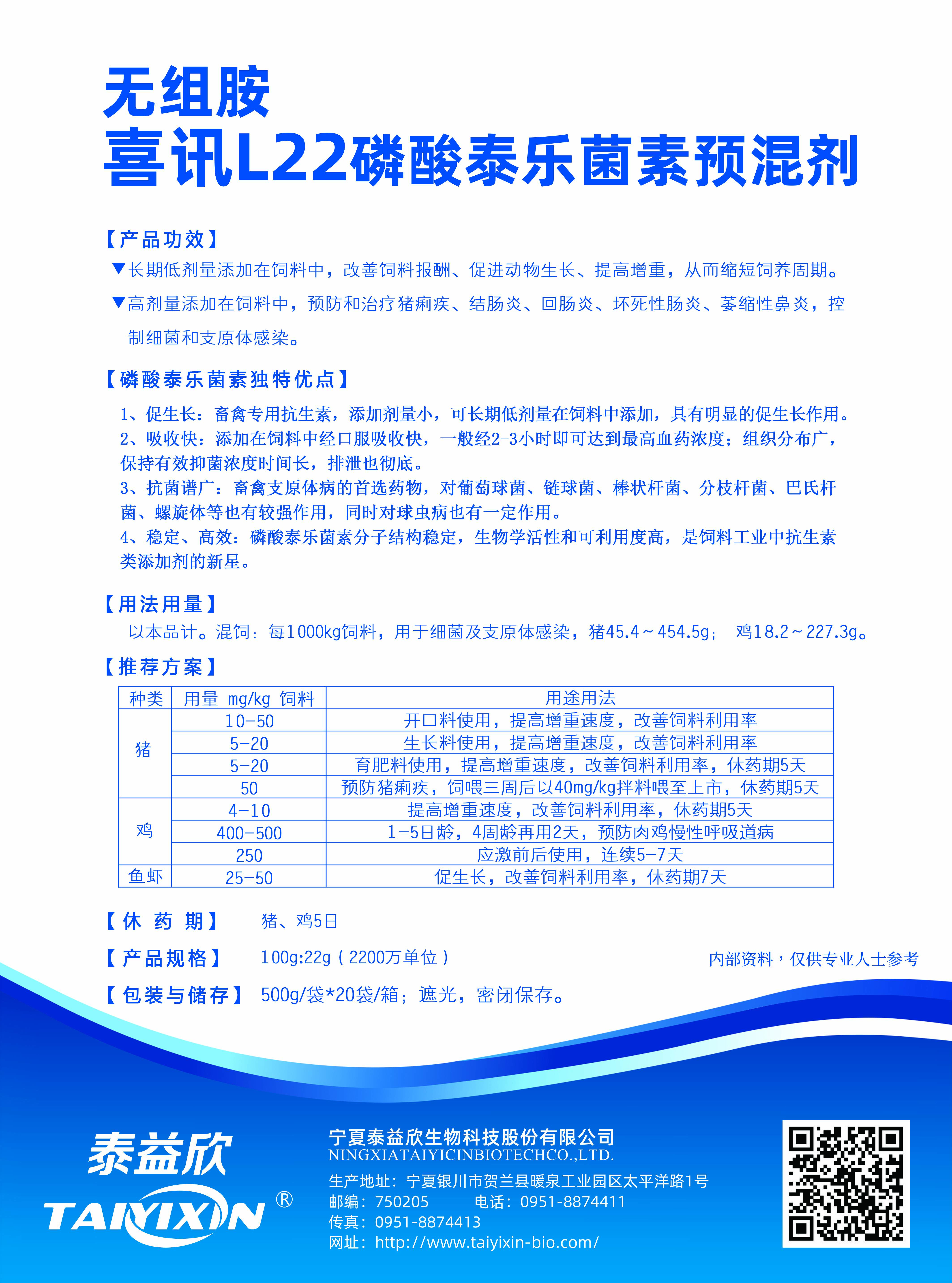
Adding low doses for a long term in feed can improve feed conversion ratio, promote animal growth, increase weight gain, and thus shorten the feeding cycle. Adding high doses in feed can prevent and treat swine dysentery, colitis, ileitis, necrotic enteritis and atrophic rhinitis, and control bacterial and mycoplasma infections.
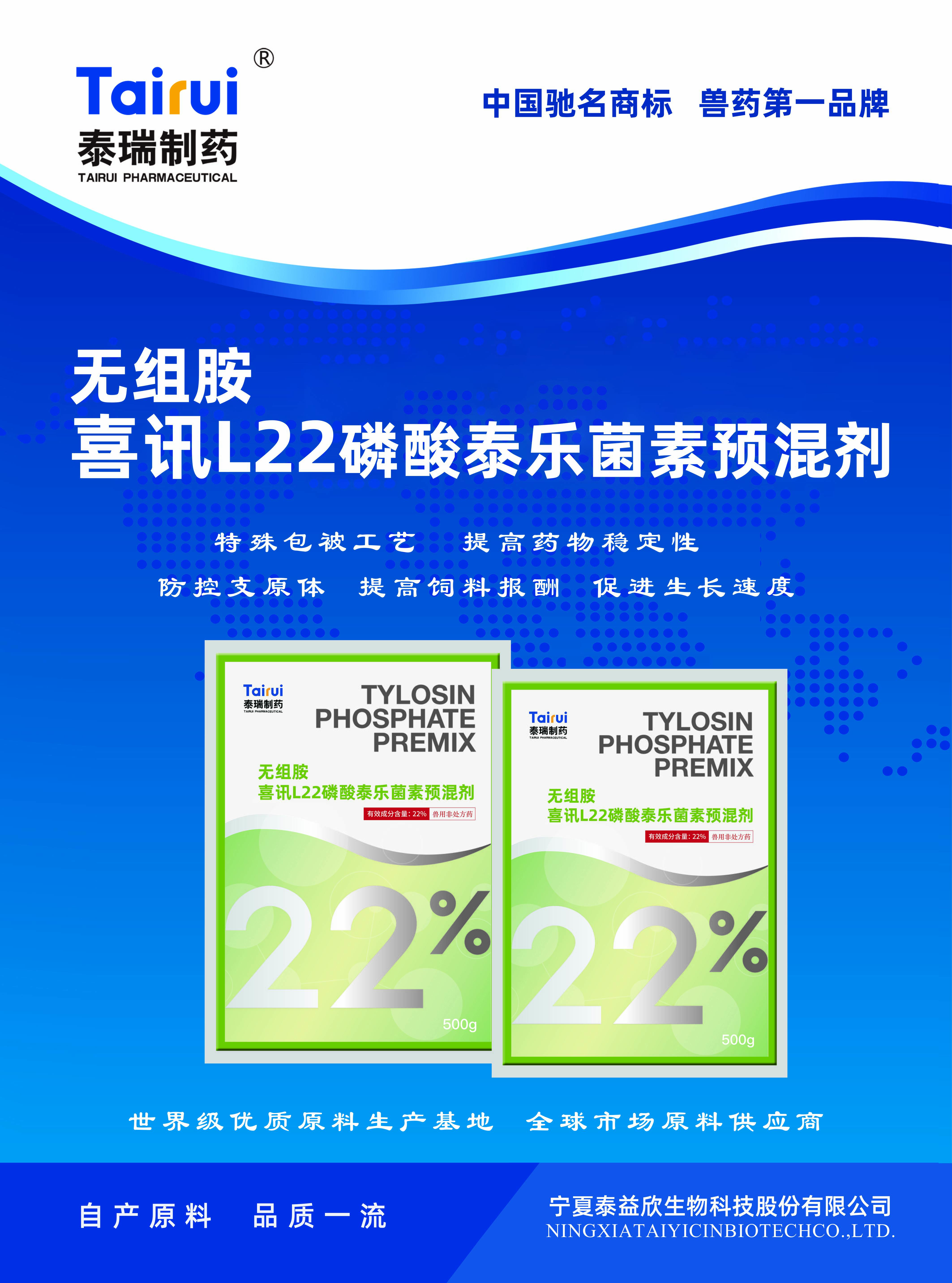
Tylosin, a macrolide antibiotic, is the first-choice drug for the prevention and treatment of mycoplasma diseases in livestock and poultry. It is mainly used for the prevention and treatment of mycoplasma pneumonia in pigs and chickens, contagious pleuropneumonia in sheep, mycoplasma mastitis and arthritis in cattle, etc.
Growth promotion: As a special antibiotic for livestock and poultry, it can be added to feed at a low dose for a long term with a small addition amount, showing obvious growth-promoting effects.
Rapid absorption: When added to feed, it is rapidly absorbed after oral administration, generally reaching the maximum blood drug concentration within 2-3 hours; it has a wide tissue distribution, maintains an effective bacteriostatic concentration for a long time, and is completely excreted.
Broad antibacterial spectrum: It is the first-choice drug for mycoplasma diseases in livestock and poultry, and also has strong effects on staphylococcus, streptococcus, corynebacterium, mycobacterium, pasteurella, spirochete, etc., and also has a certain effect on coccidiosis.
Stable and efficient: Tylosin phosphate has a stable molecular structure, high biological activity and availability, making it a new star among antibiotic additives in the feed industry.

视频号二维码

公众号
联系方式
视频号二维码
公众号