Erythromycin thiocyanate has a similar effect on Gram-positive bacteria as penicillin, but its antibacterial spectrum is broader than that of penicillin. Sensitive Gram-positive bacteria include Staphylococcus aureus (including penicillin-resistant Staphylococcus aureus), Streptococcus pneumoniae, Streptococcus, Bacillus anthracis, Erysipelothrix rhusiopathiae, Listeria monocytogenes, Clostridium septicum, Clostridium chauvoei, etc. Sensitive Gram-negative bacteria include Haemophilus influenzae, Neisseria meningitidis, Brucella, Pasteurella, etc. In addition, it also has good effects on Campylobacter, Mycoplasma, Chlamydia, Rickettsia and Leptospira. The antibacterial efficacy of erythromycin thiocyanate is enhanced in alkaline solutions.
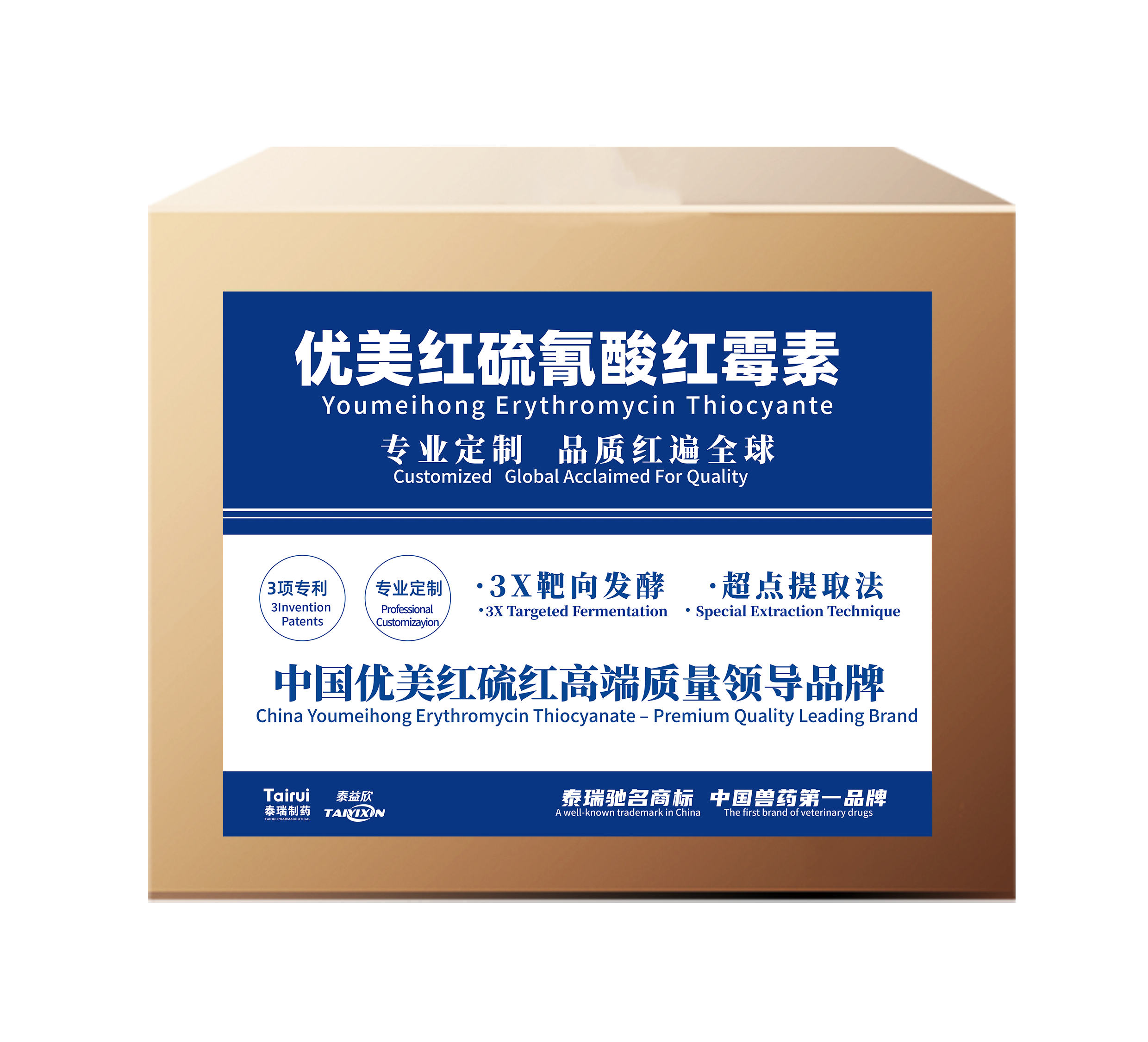
Main Component: Erythromycin
Molecular Formula: C₃₇H₆₇NO₁₃S (Note: The original formula "CHN₂O₁gS" may contain errors; the correct molecular formula for erythromycin thiocyanate is typically C₃₇H₆₇NO₁₃S)
Molecular Weight: 793.04
Properties:
This product is a white or off-white crystalline powder, odorless, and bitter in taste.
Solubility:
Freely soluble in methanol or ethanol; slightly soluble in water or chloroform.
Pharmacological Actions:
The antibacterial spectrum is similar to benzylpenicillin. It exhibits strong activity against Gram-positive bacteria such as Staphylococcus aureus, Streptococcus, and Streptococcus pneumoniae. It also has certain effects against Gram-negative bacteria like Pasteurella and Brucella. Additionally, this product is effective against mycoplasma, rickettsia, leptospira, actinomycetes, and Nocardia, but has no activity against intestinal Gram-negative bacilli such as Escherichia coli and Salmonella.
This product should not be used simultaneously with other macrolides or lincosamides due to their identical sites of action.
Combined use with β-lactams may exhibit antagonistic effects.
It inhibits the cytochrome oxidase system, and when used in combination with certain drugs, it may suppress their metabolism.
视频号二维码
公众号
联系方式
视频号二维码
公众号